

How Do You Protect Your Investment in a Brighter Smile?
You’ve just invested time and money in professional teeth whitening, and your smile looks amazing. But here’s the reality—without proper aftercare, those brilliant results can fade within months. The same foods, drinks, and habits that stained your teeth before will stain them again if you’re not careful.
Maintaining your newly whitened smile doesn’t require extreme lifestyle changes or complicated routines. With smart daily habits, strategic dietary choices, and occasional touch-up treatments, you can keep your teeth bright for years. Understanding exactly what threatens your results and how to protect them makes all the difference between short-lived brightness and long-lasting radiance.
The Dental Care Group’s Miami-Dade and Broward County dental clinicscan help. Call our Aventura dentistsat (305) 935-2797, our Pembroke Pines dentistsat (954) 430-2300, or our Fort Lauderdale dentistsat (954) 963-3706. We serve patients throughout the surrounding South Florida communities.
Three Convenient Locations, One Standard of Excellence
With welcoming offices in Aventura, Fort Lauderdale, and Pembroke Pines, patients from all over Broward and Miami-Dade counties choose us because the experience is the same no matter which location they visit: modern facilities, friendly faces, and the same gentle, high-quality care that has earned thousands of five-star reviews.
First 48 Hours After Teeth Whitening
 Following whitening treatment, research shows that strictly avoiding staining foods and beverages may be unnecessary to maintain your bright smile. A 2024 systematic review on patient diet after teeth whiteningfound that normal dietary habits don’t significantly compromise whitening results, even during the initial recovery period when enamel is more porous.
The real concern in those first 48 hours isn’t staining—it’s sensitivity management. The bleaching process temporarily softens enamel and can expose microscopic nerve pathways, making teeth reactive to hot, cold, acidic, or even sweet foods. During this critical window, your focus should be on supporting enamel remineralization and minimizing discomfort rather than obsessing over coffee or red wine. Gentle care allows your teeth to stabilize naturally while preserving your investment in a whiter smile.
Use a Straw for Any Beverages
If you absolutely must consume anything other than water, use a straw to minimize contact between the liquid and your front teeth. Position the straw toward the back of your mouth. This protective measure helps even with lighter-colored drinks that might contain subtle staining compounds.
Skip Tobacco Products Completely
Cigarettes, cigars, chewing tobacco, and vaping products all contain compounds that rapidly stain freshly whitened teeth. The first 48 hours are when your teeth are most vulnerable. If you’re trying to quit, this is the perfect motivation to stay tobacco-free.
Rinse Immediately After Eating or Drinking
Swish water around your mouth for 30 seconds after consuming anything other than water. This quick rinse removes residual particles and dilutes any staining compounds before they penetrate your enamel. Make this an automatic habit whenever you eat or drink.
Manage Temporary Sensitivity
Mild to moderate tooth sensitivity is completely normal during the first 48 hours. Use desensitizing toothpaste designed for sensitive teeth. Avoid extremely hot or cold foods and beverages. If sensitivity becomes severe or persists beyond a few days, contact your dentist for guidance.
Avoid Acidic Foods and Drinks
Citrus fruits, vinegar-based dressings, carbonated beverages, and other acidic items can temporarily weaken enamel that’s already porous from whitening. This makes your teeth more susceptible to staining and increases sensitivity. Save acidic foods for after the critical 48-hour window.
Stay Hydrated with Plain Water
Drink plenty of water throughout the day. Water keeps your mouth clean, washes away food particles, maintains saliva production, and doesn’t pose any staining risk. Make water your primary beverage during this vulnerable period.
First Two Weeks of Whitening Maintenance
Modified Dietary Habits
You can slowly add back staining foods and beverages, but do so strategically. Consume coffee or tea with breakfast rather than sipping throughout the day. Limit red wine to occasional glasses rather than nightly consumption. Being mindful during these first two weeks helps your results stabilize.
Use Whitening Toothpaste Carefully
Start incorporating whitening toothpaste into your routine, but don’t overuse it. Twice daily brushing with whitening formulas can be abrasive. Consider alternating between whitening toothpaste and regular fluoride toothpaste to balance maintenance with enamel protection.
Rinse After Every Meal
Make mouth rinsing an automatic habit after eating anything. Swish water vigorously for 30 seconds to remove food particles and dilute staining compounds before they penetrate enamel. This simple habit dramatically reduces re-staining.
Maintain Excellent Oral Hygiene
Brush twice daily for two minutes each time with a soft-bristle toothbrush. Floss at least once daily to remove plaque and particles between teeth where stains accumulate. Use antiseptic mouthwash to kill bacteria that contribute to discoloration.
Schedule Your Professional Cleaning
If you’re due for a regular dental cleaning, schedule it during this two-week period. Professional cleaning removes any surface stains that have developed and helps maintain the brightness achieved through whitening. Your hygienist can also provide personalized aftercare advice.
Monitor Your Sensitivity Levels
Most tooth sensitivity resolves within the first week after whitening. If you’re still experiencing significant discomfort after two weeks, contact your dentist. Persistent sensitivity may indicate an underlying issue requiring attention or suggest modifications needed for future whitening treatments.
Start Planning Touch-Up Timeline
Discuss with your dentist when you’ll likely need your first touch-up treatment. Depending on your habits and staining tendencies, this might be six months to two years away. Having a plan helps you maintain results proactively rather than waiting until significant re-staining occurs.
Avoid Aggressive Whitening Methods
Don’t try to extend your results by using over-the-counter whitening strips or additional treatments immediately after professional whitening. Your teeth need recovery time. Overusing whitening products can damage enamel and increase sensitivity dramatically.
Long-Term Care and Maintenance Strategies
Sustaining your bright smile for years requires consistent habits and smart choices that become part of your lifestyle.
Practice Daily Oral Hygiene Rigorously
Brush twice daily with fluoride toothpaste using proper technique—angle your brush at 45 degrees toward the gum line and use gentle circular motions. Floss every single day, preferably before bedtime, to remove plaque and food particles between teeth. Use antiseptic mouthwash to reduce bacteria that contribute to staining and decay.
Use Straws for Staining Beverages
Make straws your standard practice when drinking coffee, tea, wine, cola, or any dark-colored beverage. Position the straw toward the back of your mouth to minimize front tooth contact. This simple habit dramatically reduces staining exposure over time.
Rinse Immediately After Consuming Staining Substances
Get in the habit of rinsing with water within minutes of consuming staining foods or beverages. If brushing isn’t possible, at least swish water around your mouth for 30 seconds. This quick action prevents stains from setting into your enamel.
Quit Tobacco Products Permanently
Tobacco causes the fastest and most stubborn tooth staining of any substance. Cigarettes, cigars, chewing tobacco, and even vaping products contain compounds that rapidly yellow teeth. Quitting tobacco protects your whitening investment while dramatically improving your overall health.
Limit Highly Pigmented Foods and Drinks
You don’t need to eliminate staining substances entirely, but being strategic helps. Drink coffee or tea with meals rather than sipping throughout the day. Limit red wine to occasional enjoyment. Choose lighter alternatives when possible—white wine instead of red, green tea instead of black.
Chew Sugar-Free Gum After Meals
Chewing gum stimulates saliva production, which naturally cleanses teeth and neutralizes acids. Choose white, sugar-free gum and chew for 20 minutes after meals when brushing isn’t immediately possible. This mechanical action helps dislodge food particles while promoting oral health.
Schedule Professional Cleanings Every Six Months
Regular dental cleanings remove surface stains before they penetrate deeply into enamel. Your hygienist uses specialized tools to polish away the accumulation that daily brushing misses. These appointments also allow your dentist to monitor your oral health and whitening results.
Use Whitening Toothpaste Strategically
Incorporate ADA-approved whitening toothpaste into your routine two to three times weekly. Don’t overuse it daily, as the abrasives can wear enamel over time. Alternate between whitening formulas and regular fluoride toothpaste to balance maintenance with protection.
Consider Electric Toothbrushes
Electric toothbrushes remove more plaque and surface stains than manual brushing. The consistent motion and built-in timers ensure thorough cleaning. Many models include pressure sensors that prevent aggressive brushing that could damage enamel or irritate gums.
Stay Hydrated Throughout the Day
Drinking plenty of water maintains saliva production, which naturally cleanses your mouth and protects against staining. Water also dilutes acids and washes away food particles constantly. Make water your primary beverage to protect your whitening results.
Plan Regular Touch-Up Treatments
Most patients need touch-up whitening every 12 to 24 months, depending on their habits and staining tendencies. If you received custom take-home trays with your initial treatment, keep them for easy touch-ups. A few nights of at-home whitening can restore brightness without requiring another full treatment.
Address Grinding or Clenching Promptly
Teeth grinding wears away enamel, exposing darker dentin underneath and creating microscopic cracks where stains accumulate. If you grind your teeth at night, wear a protective nightguard. This preserves both your whitening results and your overall dental health.
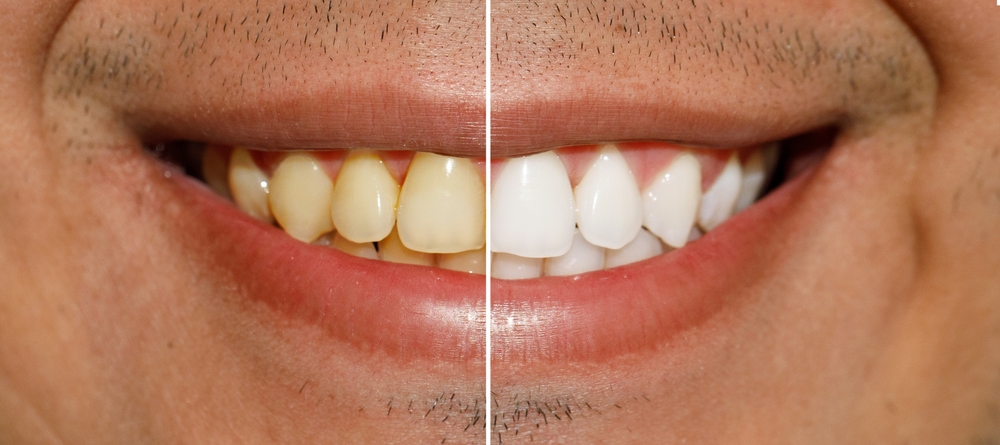
What Causes Re-Staining After Teeth Whitening
Knowing your enemies helps you defend against them. Several factors threaten your whitening results over time.
- Dark-Colored Beverages:Coffee, black tea, red wine, and cola contain chromogens—pigmented molecules that attach to tooth enamel. Regular consumption creates a gradual darkening that accumulates over months and years.
- Tobacco Products:Nicotine and tar produce some of the most stubborn stains. Smoking even occasionally causes rapid yellowing and brown discoloration that’s difficult to remove.
- Highly Pigmented Foods:Berries, tomato sauce, soy sauce, balsamic vinegar, curry, and other intensely colored foods deposit pigments on teeth. While these foods offer health benefits, frequent consumption affects tooth color.
- Acidic Foods and Drinks:Citrus, vinegar, carbonated beverages, and wine erode enamel, making it more porous and susceptible to staining. Acid weakens the protective outer layer, allowing pigments to penetrate more easily.
- Poor Oral Hygiene:Inadequate brushing and flossing allow plaque buildup that traps staining particles against tooth surfaces. This creates a rough texture where stains accumulate more readily.
- Natural Aging:Even with perfect care, teeth gradually yellow as we age. Enamel naturally thins over time, revealing more of the darker dentin layer beneath. This process is slow but inevitable.
- Certain Medications:Some antibiotics, antihistamines, blood pressure medications, and chemotherapy drugs can cause tooth discoloration. If you take medications that affect tooth color, discuss this with your dentist.
Maintaining Results Based on Whitening Method
Different whitening treatments have slightly different maintenance requirements.
In-Office Whitening Maintenance
Results from in-office treatments typically last 12 to 36 months with proper care. The high-concentration gel used in professional settings delivers deep, lasting results but doesn’t make teeth immune to re-staining. Follow all aftercare guidelines strictly, especially during the first 48 hours. Most patients schedule touch-up appointments every 12 to 18 months to maintain their desired brightness.
Custom Take-Home Tray Maintenance
If you received custom whitening trays, keep them clean and safely stored. These trays are your most cost-effective tool for future touch-ups. When you notice slight yellowing developing, use your trays with professional-strength gel for three to five nights to restore brightness. This proactive approach prevents significant re-staining from developing.