

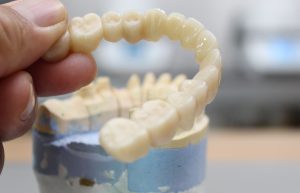
 Missing a tooth or two and tired of the gap in your smile? At The Dental Care Group in Fort Lauderdale, we restore missing teeth with custom dental bridges that look natural, feel comfortable, and function just like your real teeth. No surgery required, no lengthy healing process—just a beautiful, complete smile you’ll be proud to show off.
A dental bridge literally “bridges” the gap created by one or more missing teeth. It’s anchored to the teeth on either side of the gap, creating a permanent, stable restoration that lets you eat, speak, and smile with confidence. Whether you lost a tooth to decay, injury, or gum disease, we can help you get your smile back.
Ready to fill that gap and restore your smile? Call our Fort Lauderdale dental office at 954-963-3706 to schedule your dental bridge consultation.
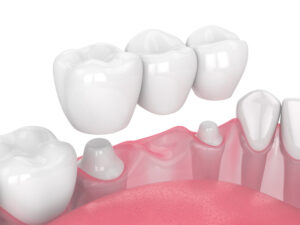 A dental bridge is a fixed (non-removable) restoration that replaces one or more missing teeth. It consists of:
- Pontics: Artificial teeth that fill the gap where your natural teeth are missing
- Abutments: Crowns that fit over the natural teeth on either side of the gap, anchoring the bridge in place
The entire bridge is custom-made to match the color, shape, and size of your natural teeth. Once cemented in place, it becomes a permanent part of your mouth—you can’t take it out, and with proper care, it can last 10-15 years or longer.
Why Replace Missing Teeth?
You might think a missing tooth or two is no big deal, especially if it’s toward the back of your mouth where people can’t see it. But leaving gaps in your smile can lead to serious problems:
- Shifting Teeth: Surrounding teeth drift into the empty space, causing misalignment and bite problems
- Bone Loss: Without a tooth root to stimulate it, your jawbone begins to deteriorate
- Difficulty Chewing: Missing teeth make it harder to eat certain foods, affecting your nutrition
- Speech Problems: Gaps can affect how you pronounce certain words
- Facial Sagging: Over time, bone loss can cause your face to take on a sunken appearance
- Increased Wear: Remaining teeth work harder to compensate, leading to premature wear
- TMJ Issues: Changes in your bite can contribute to jaw pain and dysfunction
The sooner you replace missing teeth, the better. Dental bridges prevent these problems while restoring your smile’s appearance and function.
Types of Dental Bridges
At The Dental Care Group, we offer several types of bridges to suit different situations:
Traditional Fixed Bridge
This is the most common type of bridge. It consists of one or more pontics (artificial teeth) held in place by dental crowns cemented onto the teeth on both sides of the gap. Traditional bridges are strong, durable, and look completely natural.
Cantilever Bridge
When there’s only one natural tooth next to the gap (rather than teeth on both sides), we may recommend a cantilever bridge. It’s anchored to just one adjacent tooth, making it ideal for areas with less chewing pressure, like front teeth.
Maryland Bridge (Resin-Bonded Bridge)
This conservative option uses a metal or porcelain framework bonded to the back of the adjacent teeth. It requires minimal alteration of neighboring teeth, making it a good choice for replacing front teeth in certain situations. However, it’s not as strong as a traditional bridge.
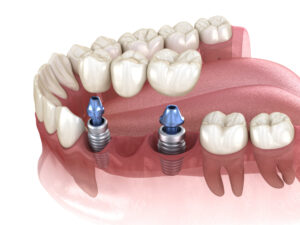 Implant-Supported Bridge
If you’re missing several teeth in a row, an implant-supported bridge might be the best option. Instead of relying on natural teeth for support, the bridge is anchored to dental implants surgically placed in your jawbone. This is the strongest, most stable option and doesn’t require altering healthy teeth.
During your consultation, we’ll examine your mouth, discuss your goals, and recommend the type of bridge that’s best for your specific situation.
The Dental Bridge Process
Getting a dental bridge at our Fort Lauderdale office typically takes two visits over two to three weeks.
First Visit: Preparation and Impressions
We’ll numb the area to keep you comfortable, then prepare the teeth on either side of the gap (the abutment teeth). This involves reshaping them to make room for the crowns that will anchor your bridge.
Next, we’ll take detailed impressions or digital scans of your teeth. These go to our dental lab, where skilled technicians will craft your custom bridge to perfectly match your natural teeth. Before you leave, we’ll place a temporary bridge to protect your prepared teeth and maintain your appearance while your permanent bridge is being made.
Between Visits: Lab Fabrication
Your impressions are sent to a professional dental laboratory where your bridge is custom-crafted. This typically takes two to three weeks. The lab carefully matches the color, shape, and size to your surrounding teeth for a seamless, natural look.
Second Visit: Bridge Placement
When your permanent bridge is ready, you’ll return to our office. We’ll remove your temporary bridge, thoroughly clean the prepared teeth, and check the fit and appearance of your new bridge.
We’ll make sure you’re completely happy with how it looks and feels. Once everything is perfect, we’ll permanently cement the bridge in place. We’ll check your bite, make any final adjustments, and you’ll walk out with a complete, beautiful smile.
Benefits of Dental Bridges
Why choose a dental bridge to replace missing teeth? Here are the advantages:
 Restores Your Smile: Fills gaps for a complete, confident appearance
- Improves Chewing: Lets you eat all your favorite foods again
- Maintains Face Shape: Prevents facial sagging caused by missing teeth
- Prevents Teeth Shifting: Keeps surrounding teeth in their proper positions
- Restores Speech: Eliminates speech difficulties caused by missing teeth
- Non-Surgical: Unlike implants, bridges don’t require surgery (for traditional bridges)
- Faster Treatment: Completed in just two visits over a few weeks
- Natural Appearance: Custom-matched to blend seamlessly with your smile
- Durable: With proper care, bridges last 10-15 years or more
- Fixed in Place: No removing or soaking like dentures—just brush and go
Caring for Your Dental Bridge
Taking care of your bridge is simple and similar to caring for your natural teeth. To help your bridge last as long as possible:
- Brush twice daily with fluoride toothpaste, paying attention to where the bridge meets your gums
- Floss daily using a floss threader or special bridge floss to clean under the pontic
- Use an antibacterial mouthwash to reduce plaque buildup
- Avoid chewing ice, hard candy, or other very hard objects
- Don’t use your teeth to open packages
- Visit us for regular dental cleanings and checkups every six months
- Contact us right away if your bridge feels loose or damaged
The most important area to keep clean is where the bridge meets your natural teeth and gums. This is where decay and gum disease are most likely to occur if plaque builds up.
Dental Bridge vs. Dental Implant: Which Is Right for You?
Both bridges and implants can replace missing teeth effectively. Here’s how to decide:
Choose a dental bridge if:
- You want a faster, non-surgical solution
- The teeth on either side of the gap already need crowns
- You want a more affordable option
- You’re not a good candidate for surgery (due to health conditions or bone loss)
- You want to avoid a lengthy treatment timeline
Choose a dental implant if:
- You want the most durable, longest-lasting solution
- You want to preserve your jawbone density
- You don’t want to alter healthy adjacent teeth
- You’re missing multiple teeth in a row (implant-supported bridge)
- You’re willing to invest more for premium results
We’ll discuss both options during your consultation and help you make the best choice for your situation, preferences, and budget.
How Much Do Dental Bridges Cost in Fort Lauderdale?
The cost of a dental bridge varies depending on the type of bridge, the materials used, and how many teeth you’re replacing. On average, a traditional dental bridge in Fort Lauderdale costs between $2,000 to $5,000 for a three-unit bridge (one pontic and two crowns).
Factors that affect cost include:
- Number of teeth being replaced
- Type of bridge (traditional, Maryland, implant-supported)
- Materials used (porcelain, gold, zirconia)
- Complexity of your case
- Your dental insurance coverage
Most dental insurance plans cover 50-80% of the cost of bridges when they’re medically necessary. We’ll verify your benefits and provide a detailed cost estimate before beginning treatment.
We also offer flexible payment options to make your treatment affordable. Call us at 954-963-3706 to discuss pricing.